QPI Laboratories, Inc. — Photonic AI Acceleration · Hardware/Software Co-Design

Photonic computingfor energy-efficientAI inference.

QPI Laboratories is developing a photonic AI inference architecture designed to substantially reduce the energy required for neural-network computation. Our photonic inference simulator provides the development and validation environment for the hardware platform now under development.

// Initial focus: power-constrained AI inference — improved energy efficiency could enable greater inference capacity within existing power and cooling limits.

Scroll
Photonic Inference·Photonic AI Acceleration·Mach-Zehnder Interferometry·Waveguide Compute·Coherent Light·Photodetector Arrays·

Manifesto

What we're building, in three chapters.

01

The silicon bottleneck

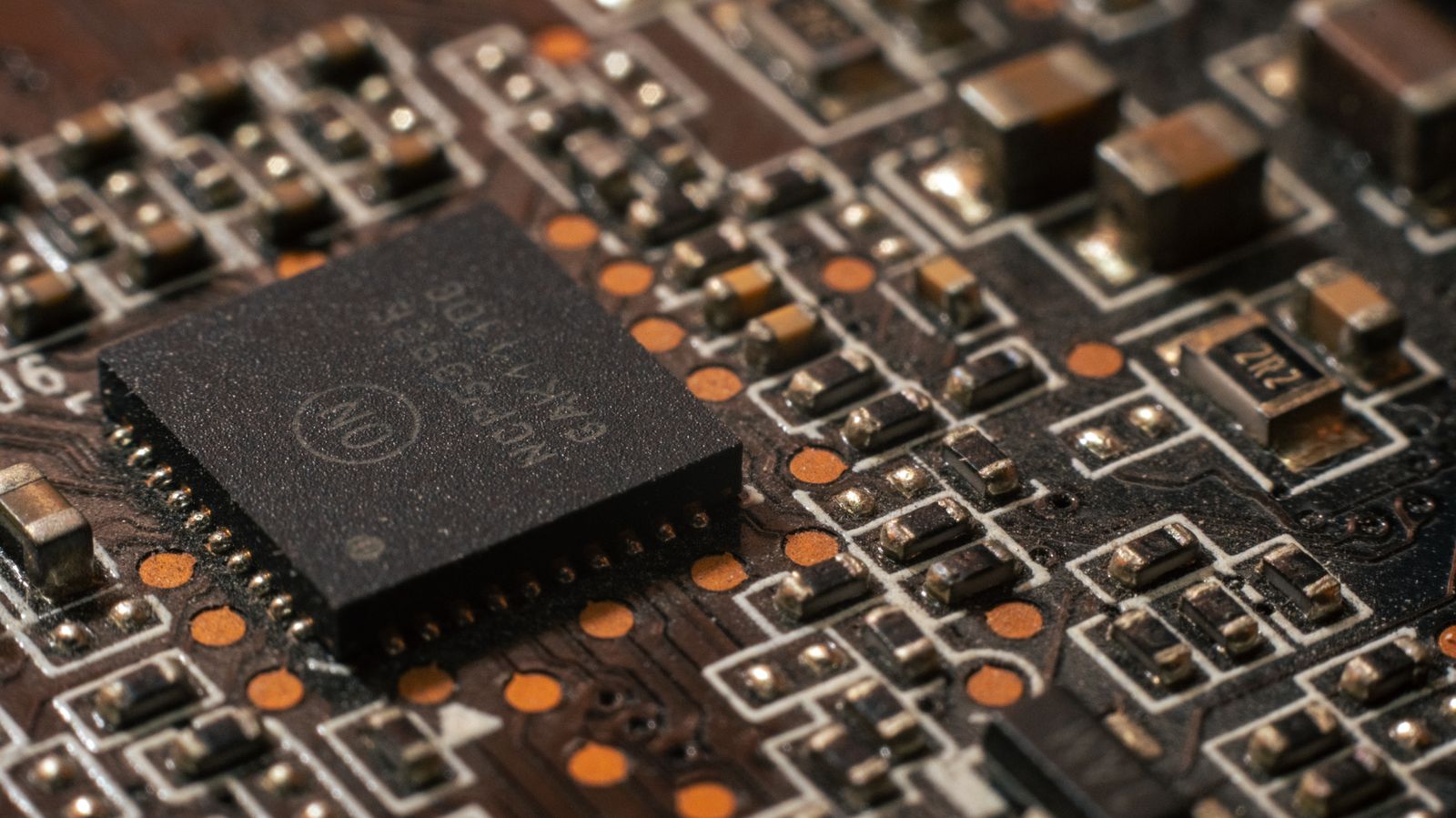
Every extra order of magnitude in model size now costs more in electrons than in math. Electronic compute burns energy on every operation and stalls on every clock cycle, while the math keeps outgrowing the machines that run it.
02

The photonic turn

Light can perform highly parallel computation as it propagates, enabling matrix operations without relying on the conventional clocked switching mechanisms used in electronic compute cores. Freeform approaches let beams interfere in open space, in whatever geometry the optics allows — interference does the linear algebra while light travels.

03

What we build

QPI Laboratories, Inc. is developing photonic AI inference accelerator technology — photonic compute architecture, hardware/software co-design, and compiler integration. The QPI Photonic Simulator is its first operational component; physical proof-of-concept validation is the next major development step.

Macro photograph of conventional silicon chips on a circuit board
fig. 01 — the silicon bottleneck, up close
Iridescent silicon wafer with photonic dies
fig. 02 — where light becomes hardware

Status

The simulator is live. Physical proof-of-concept validation is the next step.

// to be continued

// The Simulator — Live

Live

Emitter array 28×28 — MNIST 7

Photonic pipeline

VCSEL Array

narrow-line · coherent

MZM Weight Matrix W

thin-film LiNbO₃

cos²(π·w/2 + φ)

Photodetector

Σᵢ xᵢ·T(wᵢⱼ)

Readout

Model: MNIST · Linear

Photonic accuracy: 92.6%

Ideal accuracy: 98.1%

Class probabilities

0123456789
EOM BIT PRECISION: 8-BITSHOT NOISE: 0.010σLASER RIN: 0.020σTHERMAL DRIFT: 0.030σ

Run neural-network inference on a photonic-compute abstraction — tune noise, quantization, and hardware parameters in real time.

Launch Simulator

The Development Platform

Explore the architecture before hardware.

Five teams, one simulator — each arrives with a different question and leaves with the same answer.

01

Photonic computing companies

Your architecture is still on the bench. The simulator lets you pressure-test modulator choices, non-ideality budgets, and array sizing in software — before a single chip is fabbed.

  • ·Compare MZM, Ring, EAM, PCM, and DMD modulators under identical load conditions
  • ·Sweep EOM extinction ratio and bit precision to find your accuracy floor
  • ·Run the throughput model against your target TOPS before committing to array geometry
02

AI hardware companies

You're building the chip that runs the model. The simulator models how AI workloads map onto configurable photonic hardware and helps identify potential system bottlenecks before physical implementation.

  • ·Identify ADC, DAC, or modulator rate as the binding throughput constraint
  • ·Tune array width and tile count against modeled time-per-inference numbers
  • ·Test CIFAR-10 CNNs and ResNet-8 through your proposed hardware configuration
03

Research labs

  • ·Sweep across five modulator technologies — MZM, micro-ring, EAM, PCM, and DLP — and compare inference accuracy under identical noise conditions
  • ·Tune eight physical non-idealities independently: EOM bit precision, shot noise, laser RIN, source power, extinction ratio, insertion loss, thermal phase drift, and channel crosstalk
  • ·Toggle between incoherent (direct detection) and coherent (homodyne) detection modes — with LO power, phase noise, and balanced CMRR controls for the coherent path
  • ·Run parameterized sweeps with repeatable seeds so results are reproducible across configurations
  • ·All physics grounded in peer-reviewed literature: Shen et al. (Nature Photonics, 2017), Feldmann et al. (Nature, 2021), Hamerly et al. (PRX, 2019)
04

ML systems engineers

  • ·Model hardware throughput before any silicon exists — see MIPS, TOPS, and modeled time per inference update live as you change array width and tile configuration
  • ·Bottleneck detection tells you exactly where time is going: ADC readout, DAC programming, or weight loading — so you know what to optimize before tapeout
  • ·Run the Pareto explorer to sweep accuracy against modeled hardware constraints and find your operating point across noise, precision, and array size simultaneously
  • ·Compare simulated photonic and ideal inference on the same model and the same batch — dual confusion matrices update in real time so the modeled impact of hardware non-idealities is immediately visible
  • ·Supports multi-wavelength compute and waveguide tiling abstractions — a real hardware sizing tool
05

Model-optimization teams

Quantization, pruning, and mixed-precision decisions all have a photonic accuracy penalty. Run your compressed model through the simulator before assuming the hardware can absorb the trade-off.

  • ·Set EOM bit precision from 1–8 bits and watch accuracy respond in real time
  • ·Compare photonic and ideal confusion matrices at each precision level
  • ·Find the lowest precision your accuracy target can tolerate — then check the throughput gain

— Grounded in the Literature

Built on peer-reviewed photonic computing research.

The simulator's physics models, non-ideality equations, and throughput analysis are derived from the following landmark papers.

Nature Photonics

Deep learning with coherent nanophotonic circuits

Shen et al. · 2017

Nature

Inference in artificial intelligence with deep optics and photonics

Wetzstein et al. · 2020

Nature

Parallel convolutional processing using an integrated photonic tensor core

Feldmann et al. · 2021

Physical Review X

Large-scale optical neural networks based on photoelectric multiplication

Hamerly et al. · 2019

Journal of Lightwave Technology

Fundamentals of Coherent Optical Fiber Communications

Kikuchi · 2016

— Who We Are

Developing photonic computing for energy-efficient AI inference.

QPI Laboratories is developing photonic computing technology for energy-efficient AI inference. Our approach combines photonic compute architecture, hardware/software co-design, compiler integration, and a purpose-built simulation environment to develop and validate the path from AI models to physical photonic systems.

The QPI Photonic Simulator is the first operational component of this platform and enables architecture exploration and workload evaluation before physical hardware is available.

Founded

2026

First Simulator Release

October 2026

What the simulator does

The QPI Labs simulator runs neural-network models on a photonic-compute abstraction. It lets developers explore photonic matrix-vector multiplication, multi-wavelength compute, and photonic inference behavior inside full AI model graphs — long before hardware exists.

01photonic matrix-vector multiplication

Every inference is computed as a physical matrix-vector multiply — optical signals through weighted modulators, summed by photodetectors.

02multi-wavelength compute

WDM parallelism assigns independent wavelength channels to separate compute paths, multiplying effective throughput without scaling array size.

03photonic inference inside full AI model graphs

Run full pretrained MLPs and CNNs through the photonic pipeline — seven models from MNIST Linear to CIFAR-10 ResNet-8 are included.

— What's inside the simulator

— Physics Reference

A full photonic compute textbook. Baked in.

21 sections of rendered physics — LaTeX transfer functions, intuition callouts, and wins/losses tables for every modulator and noise source. Every equation the simulator uses is documented and explained.

— Live Comparison

Ideal and photonic inference run side by side.

Every run shows IDEAL FLOAT32 and PHOTONIC WITH NOISE simultaneously — including full confusion matrices for both. The difference shows the modeled impact of photonic hardware non-idealities.

— Hardware Sizing

Eight live hardware sliders. One bottleneck chart.

Tune array width, modulation rate, ADC/DAC sample rates, weight precision, and batch size — throughput and bottleneck recompute in real time. The per-tile time budget stacked bar shows exactly where your cycles go.

— Design Space Sweep

Sweep any parameter. Plot the Pareto frontier.

Pick a non-ideality parameter, enter comma-separated values, add an optional second axis for a 2D heatmap, run — the simulator plots accuracy vs throughput across every configuration. Hardware co-design at simulation speed.

— Dual Physics Paths

Incoherent or coherent. Two completely different physics.

Switch to coherent detection and the system uses homodyne readout — signed weights emerge naturally from the interference term. A full mode change with its own physics engine.

— Download

Run a sweep. Get publication-ready figures.

After any Pareto sweep, hit Download — the simulator generates a ZIP of clean, formatted plots ready for a paper or slide deck. The figures arrive ready to use.

Everything runs as numerical simulation based on configurable photonic device and system parameters.

Blue optical light streaming through a dark lab

The Simulator

The QPI Photonic Simulator
lives here.

The QPI Photonic Simulator is the first operational component of QPI Labs' broader photonic AI computing platform, providing an environment for architecture exploration, workload mapping, and pre-hardware validation: swap between five modulator technologies, choose your laser source and detection mode, model realistic hardware non-idealities, and explore Pareto trade-offs between accuracy and modeled hardware constraints — all in your browser.

01Photonic accelerator architecture — in development
02QPI Photonic Simulator — exploration · mapping · validation
03Physical proof of concept — next major step
04Future integrated photonic accelerator

// access is provisioned by a QPI Labs administrator on request

Open the Simulator

— Request Access

Request access to the simulator.

Accounts are provisioned manually. Drop your email and a line about your work — we'll reach out.